A complete home
in Peterborough.
A three-bedroom family home with over forty connected devices — lighting, shading, security, climate, entertainment and networking woven into a single system that runs around the household, not the other way around.
The connected home, modelled — every device, room by room
What the household asked for.
A home that genuinely worked for them — lights that adapted to the time of day, coverings that followed the sun, security they could trust without watching, and climate that maintained itself.
Multiple generations share the property, so every interaction had to feel intuitive regardless of technical confidence — familiar switches and remotes kept in place, with the intelligence added quietly behind them.
What stood in the way.
The property had no existing smart infrastructure. Some rooms sit in the centre of the house with limited natural light, making higher-output smart lighting essential. Certain fixtures could not accept smart bulbs directly, requiring alternative switching solutions. The layout also meant network coverage needed to extend reliably from the front entrance through to outdoor devices at the rear, a span standard Wi-Fi alone could not bridge.
Several appliances — a ceiling fan, air conditioning unit, and auxiliary lighting — relied on infrared remotes with no native smart capability. Bringing these into a unified system required bridging technologies that could learn and replay their control signals.
One network. One ecosystem.
Read top to bottom, the install resolves into layers: the connection coming in, the backbone that blankets the house, the controls people actually touch, and the automation logic tying it together. Get the lower layers right and everything above them simply works.
Six layers, one home.
Each system was specified, installed and tuned to stand on its own, then woven into the others so the house behaves as a single, coherent whole.
Fourteen points across every room.
A mix of tuneable white, colour, and ambient strip lighting was installed throughout the property, from main ceiling fixtures to accent lighting beneath shelving and around furniture. Every point is app-controlled, voice-activated, and scheduled. Rooms without compatible fittings were connected through smart switches, keeping existing fixtures in place while adding full automation.
Eight window coverings, zero manual effort.
Curtains and blinds throughout the property were fitted with compact smart motors. Living spaces open to a sunrise offset; bedrooms follow individual wake schedules. Everything closes at sunset. The shading system also ties into climate control — blinds adjust to help regulate room temperature alongside heating and cooling.
Watched front to back, wired into everything.
Three weatherproof cameras cover the property end to end — floodlight at the rear, solar-powered boundary camera, doorbell streaming live to the in-home display. A contact sensor on the rear door switches the kitchen light on and sounds a chime if opened out of hours. Every camera is cloud-recorded with real-time alerts to each phone in the house.
One room that manages itself.
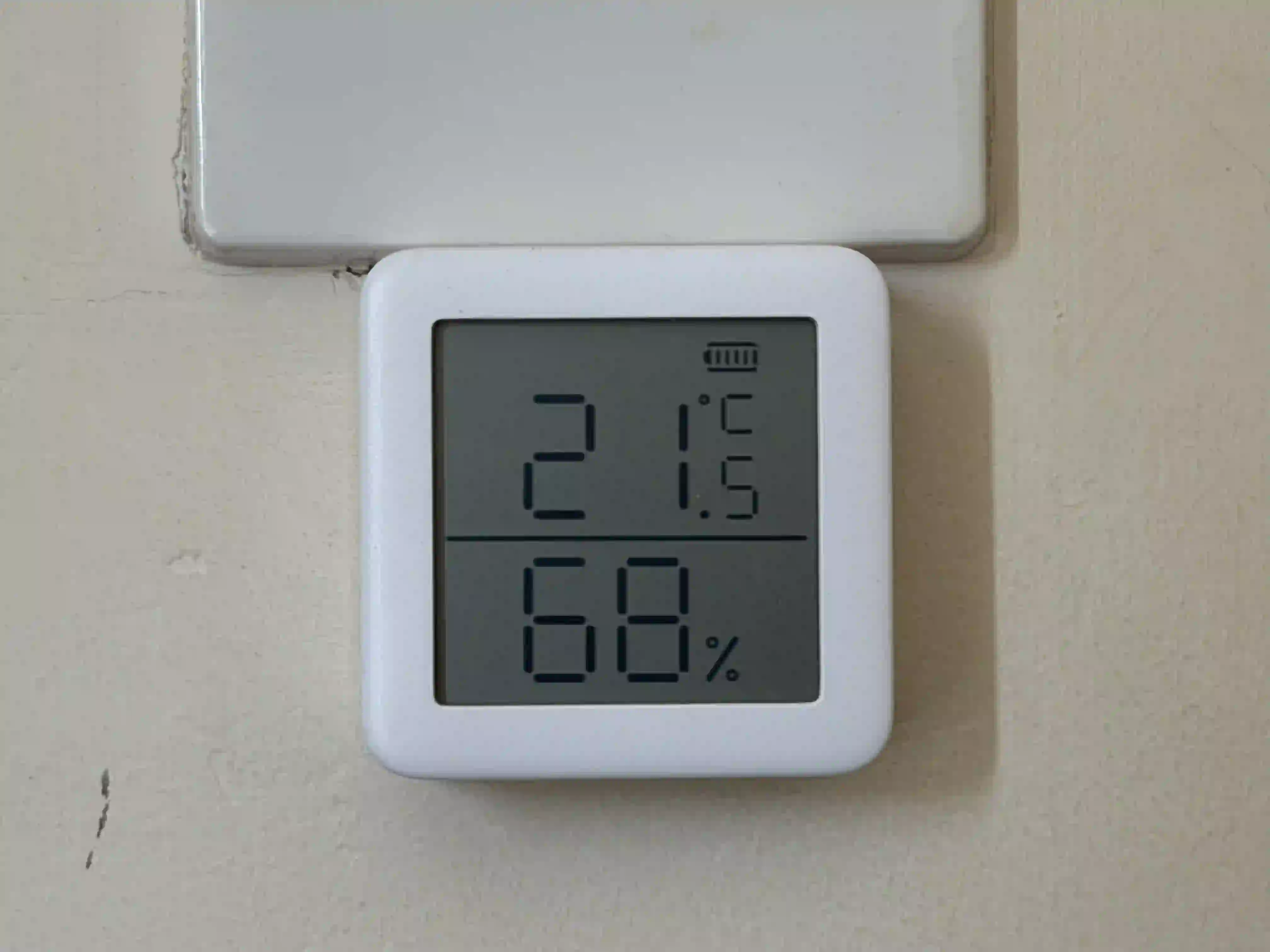
In one key room, a smart thermostat coordinates heating, cooling, a connected fan, and the automated blinds to maintain a target temperature without manual input. A smart plug controls a floor heater, and an infrared hub bridges devices that were never designed to be smart, bringing legacy appliances into the same automation layer as everything else.
Screen on, room responds.
The main television is paired with smart ambient backlighting that activates and deactivates in sync — no extra steps, no separate remotes. A connected soundbar doubles as a voice assistant output, unifying media and smart home control into a single interaction. A second screen in an adjacent room runs streaming and casting services, with a smart display nearby serving as the central control hub for the ground floor.
Seven hundred megabits, everywhere.
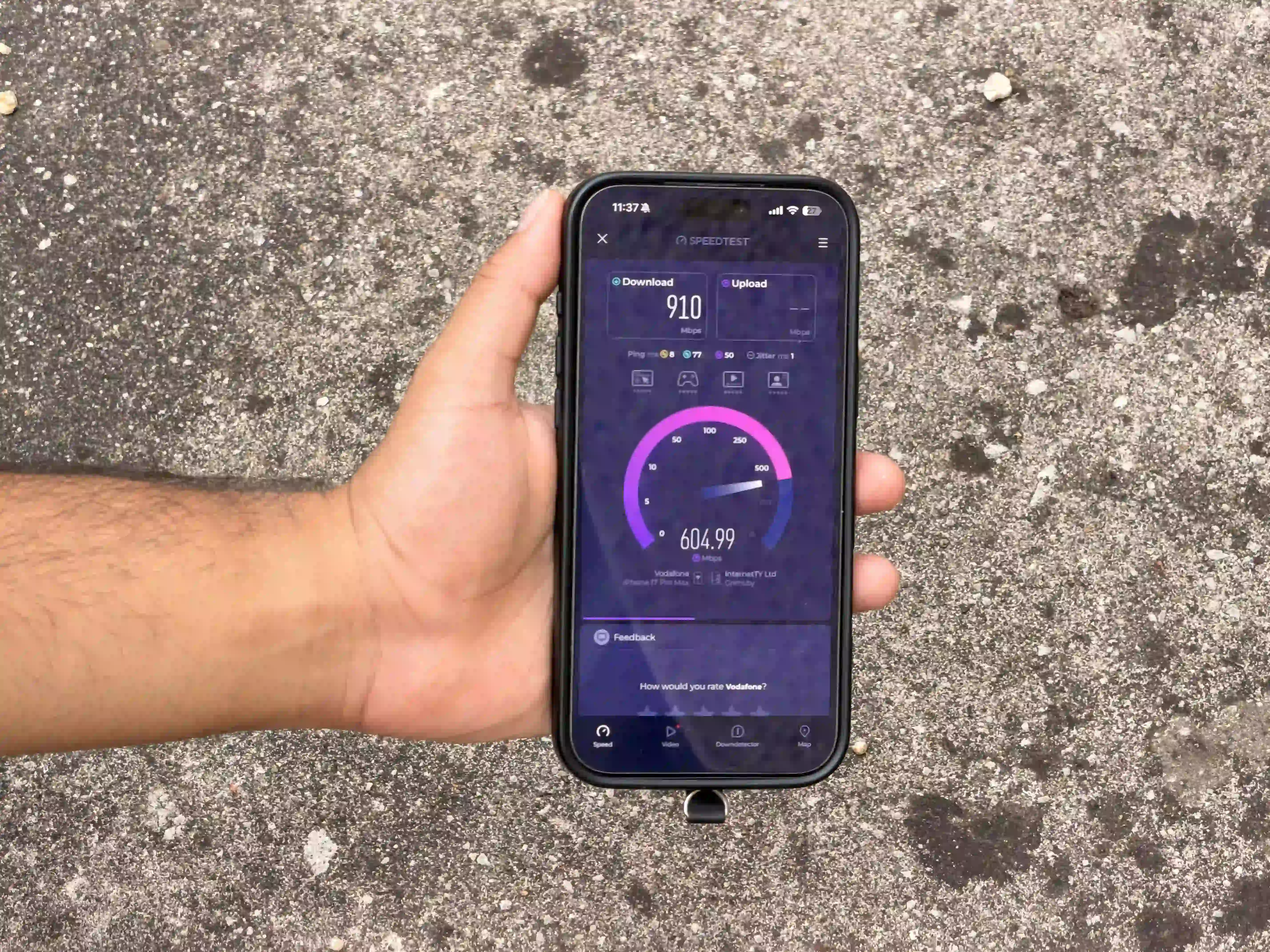
A powerline networking system was installed with a main hub and three range extenders, delivering an average of 700 Mbps across the property against a 900 Mbps plan. A dedicated extender at the rear of the house ensures reliable connectivity reaches the outermost security camera and outdoor devices, eliminating the dead zones that would otherwise make a system of this scale unreliable.
The backbone of this home — not a bolt-on.
Three cameras leave no blind spot from the street through to the parking area, all cloud-recorded with alerts to every phone in the house. But the difference here is integration: security does not sit in its own silo — it reaches into the rest of the home.
The doorbell appears on the in-home display, so a caller can be seen and answered from any floor. An opening door can switch on a light or sound a chime. Protection the household can see — and feel — without ever opening an app.
- Visitor at the doorLive feed on the in-home display — seen and answered from any floor
- Rear door opens after darkKitchen light switches on automatically · chime sounds
- Motion in the garden, lateSpotlights flood the rear · an alert tone plays on the camera
- Door left ajar in daylightA gentle chime keeps reminding until it is closed
The house moves with the household.
Every automation was mapped against the household's actual daily patterns, not a generic schedule. Wake times, work routines, arrival patterns, and evening habits were all factored in, so the home shifts through the day on its own.
Move the handle through a typical weekday and watch the home respond. Every routine shown runs automatically, all week, shifting seasonally as sunrise and sunset move.
Voice, app, switch — whatever feels natural.
The entire system runs across two voice platforms and a smartphone ecosystem, giving every member of the household access from their own device. Voice assistants sit on both floors, smart remotes stay in shared rooms so guests can control lighting without reaching for a phone, and smart switches replace standard plates where communal simplicity matters most — no one is left locked out, whatever their technical confidence.
Scale without complexity.
Over forty devices sound like complexity. In practice, nobody in the household interacts with more than a voice command, a switch, or a glance at their phone. The depth of the system is invisible — lighting shifts, shading follows the sun, climate maintains itself, security watches quietly — and it all happens without a single manual step.
That is the measure of a well-designed installation. Not the number of devices on the network, but the number of things the household no longer has to think about.